One clock, one sea
Every city you ever play sits on the same timeline, against the same rising sea. Play a city across a span of years and that run is recorded exactly as it happened. When you leave, the city does not vanish: it seals and coasts, working its farms and trading with its neighbours for as long as the world turns.
Coasting is generous by design. A founded city keeps contributing forever. The planet never punishes you for not being everywhere at once.
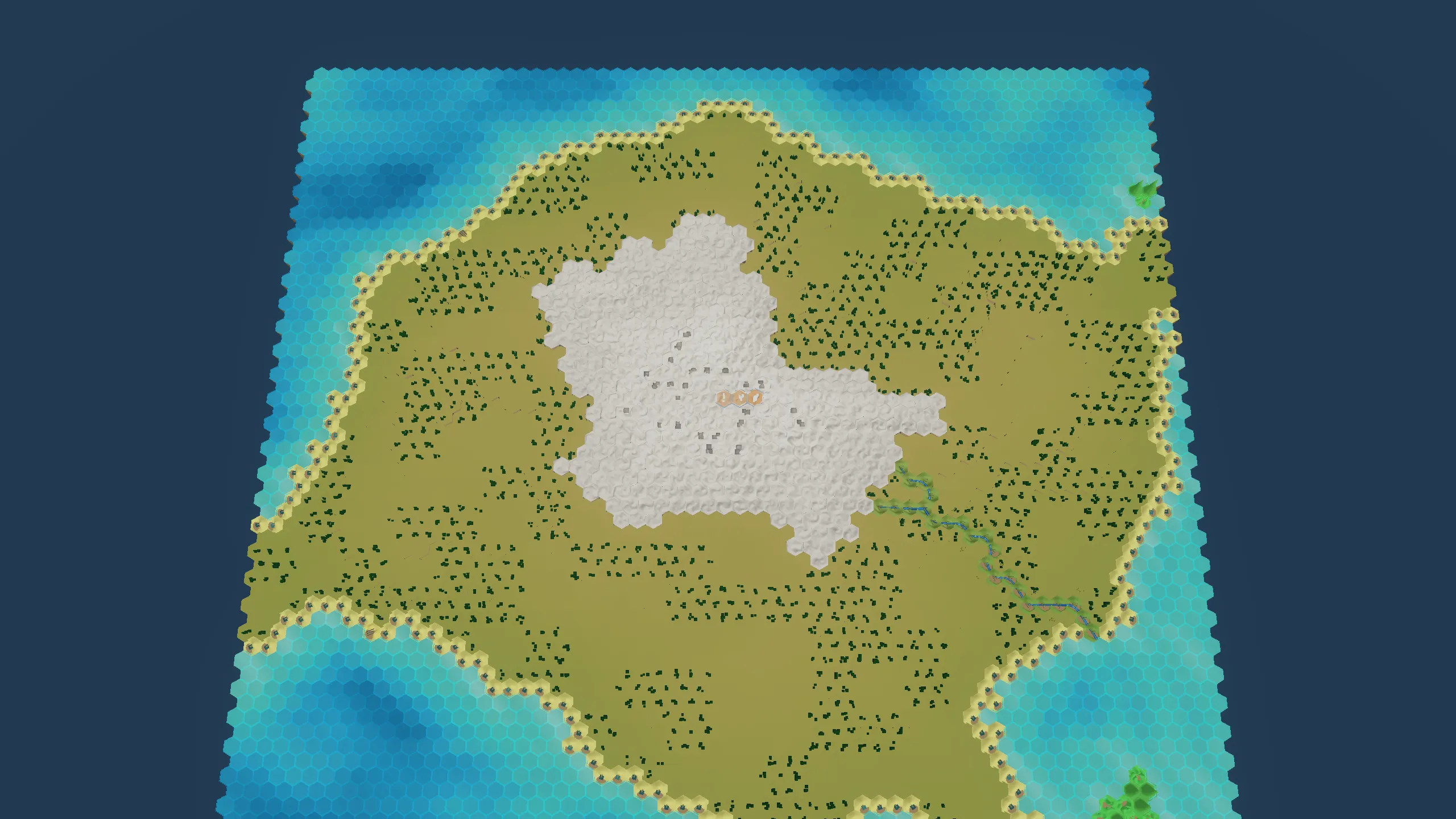
Every run banks something
Win, leave early, or drown: the run is banked either way. Three things persist. The people your city sustained become its trade output and its research. The height your walls held becomes the shape of the strategic flood: land behind a held coast stays dry on the world map for the years the walls hold. And the city's identity, the thing it became, stays on the map: a wall city, a floating city, or a city that stopped fighting and sealed itself under a dome to keep contributing from below the waterline.
Some tiles are supposed to be lost. A low island founded in year one, alone, will drown. You found it anyway, bank what it earned, and come back for it when the region can carry it.
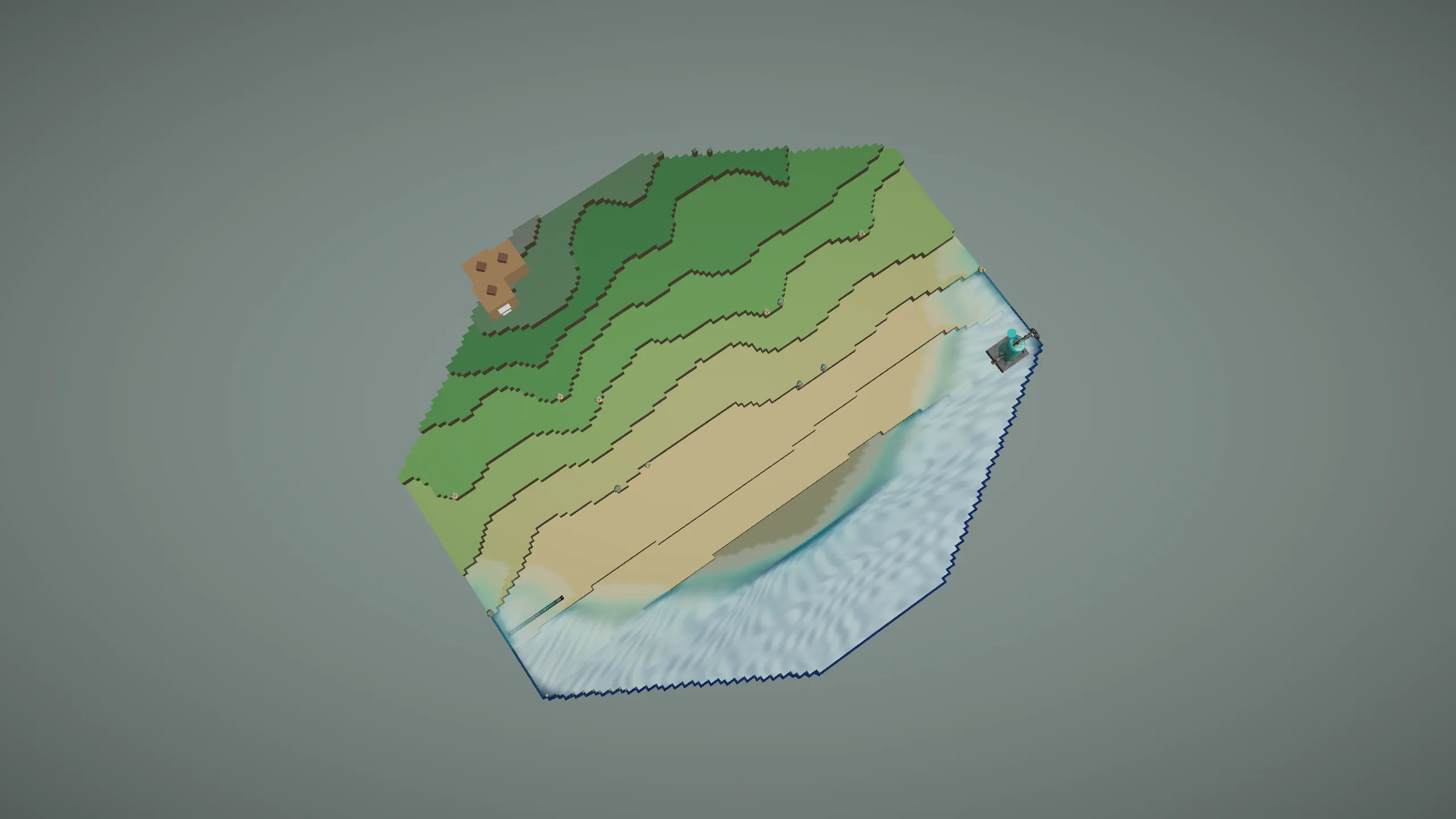
Wind the world back
This is the roguelite turn. Pick any city you have played, pick a year in its recorded life, and branch. You take the wheel live from that fork with everything the world has since learned to offer it: new neighbours, new trade, new research. The years after the fork are wiped and replayed for real.
Branches commit. The old future of that city is gone when you take a new one, which is what makes diving back in a decision instead of an undo button. The clock itself never rewinds for the planet; only your cities get second lives.
Neighbours matter, and so does when
Cities that sit near each other and overlap in time support each other: fish, trade, and technology, scaled by distance and by how much of their lives they share. Support is matched year for year. A neighbour that is poor in year five helps you little in year five; the same neighbour, prosperous by year thirty, carries you through the years when the sea is at its worst.
Support is earned live. A city you played before its neighbours existed never got their help, and the only way to give it that help is to go back and play it again, which is exactly the loop: grow the world forward, then branch old cities to cash in the region you built around them. An island that was impossible alone becomes a race between the threat curve and the support curve, and this time the support wins.
Research that outlives everything
Every person alive in every city you have founded feeds one shared research effort: the Compact. Its unlocks are permanent and they apply at founding, which is the point: trade helps a city late, when its neighbours are rich, but the Compact makes year one itself stronger. Sturdier starting walls. Founding grants. Faster builds. Better floating and dome baselines.
Between the two curves, every tile on the planet is eventually reachable: the Compact cracks the early years, trade carries the late ones, and barriers decide the map in between. A coast held at six metres keeps the valley behind it dry on the world map; a mountain range anchors the line; a city that can never be saved gets domed on purpose and pays for the walls of the cities that can.
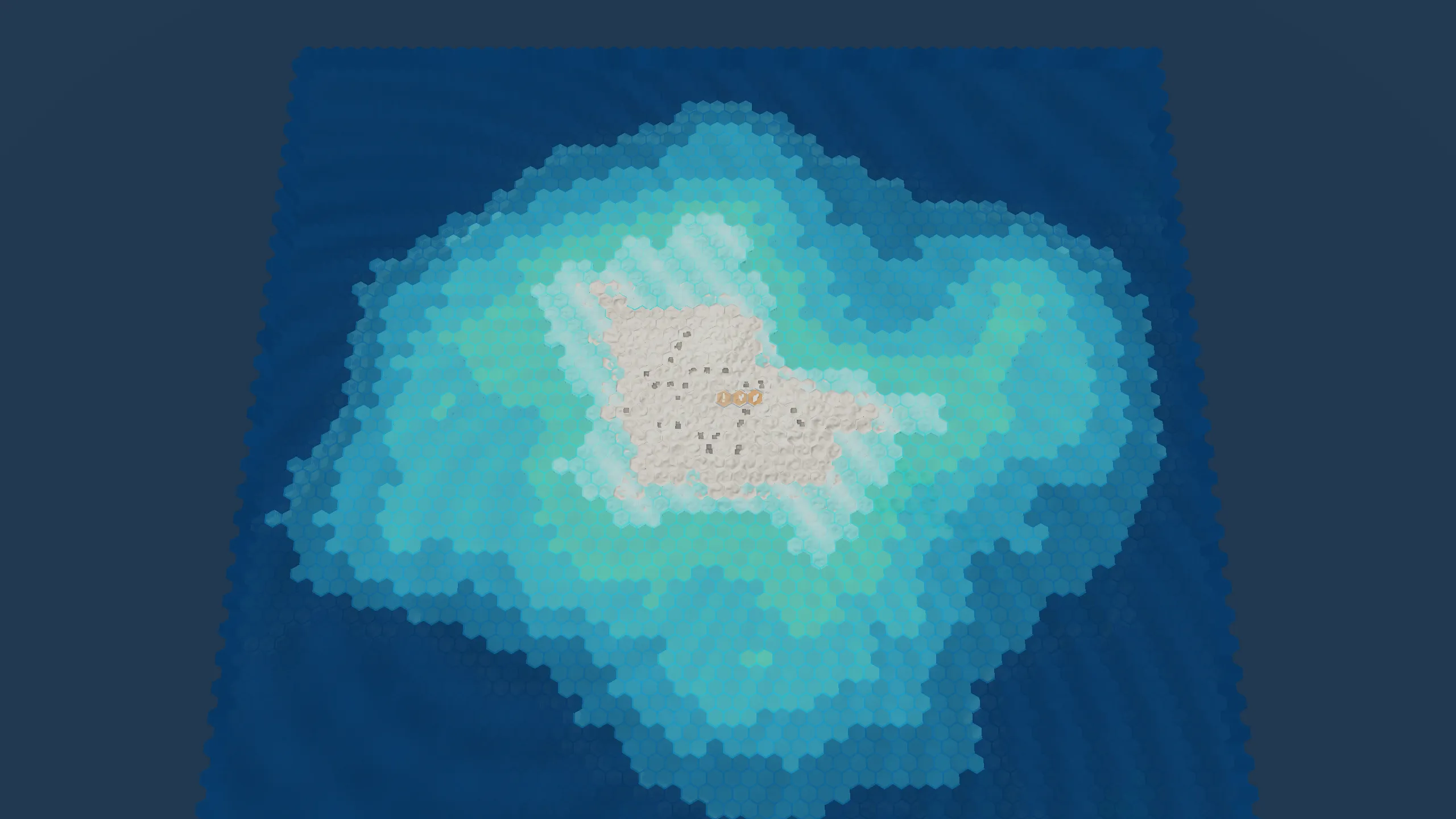
Watch it come together
One short letter when the playtest opens.